The Shift from Visibility to Intelligence
Modern financial systems are rich in data but place the burden of interpretation on users. Controllers, managers, and operators are expected to monitor dashboards, review reports, and identify what needs attention, often under tight timelines and regulatory pressure.
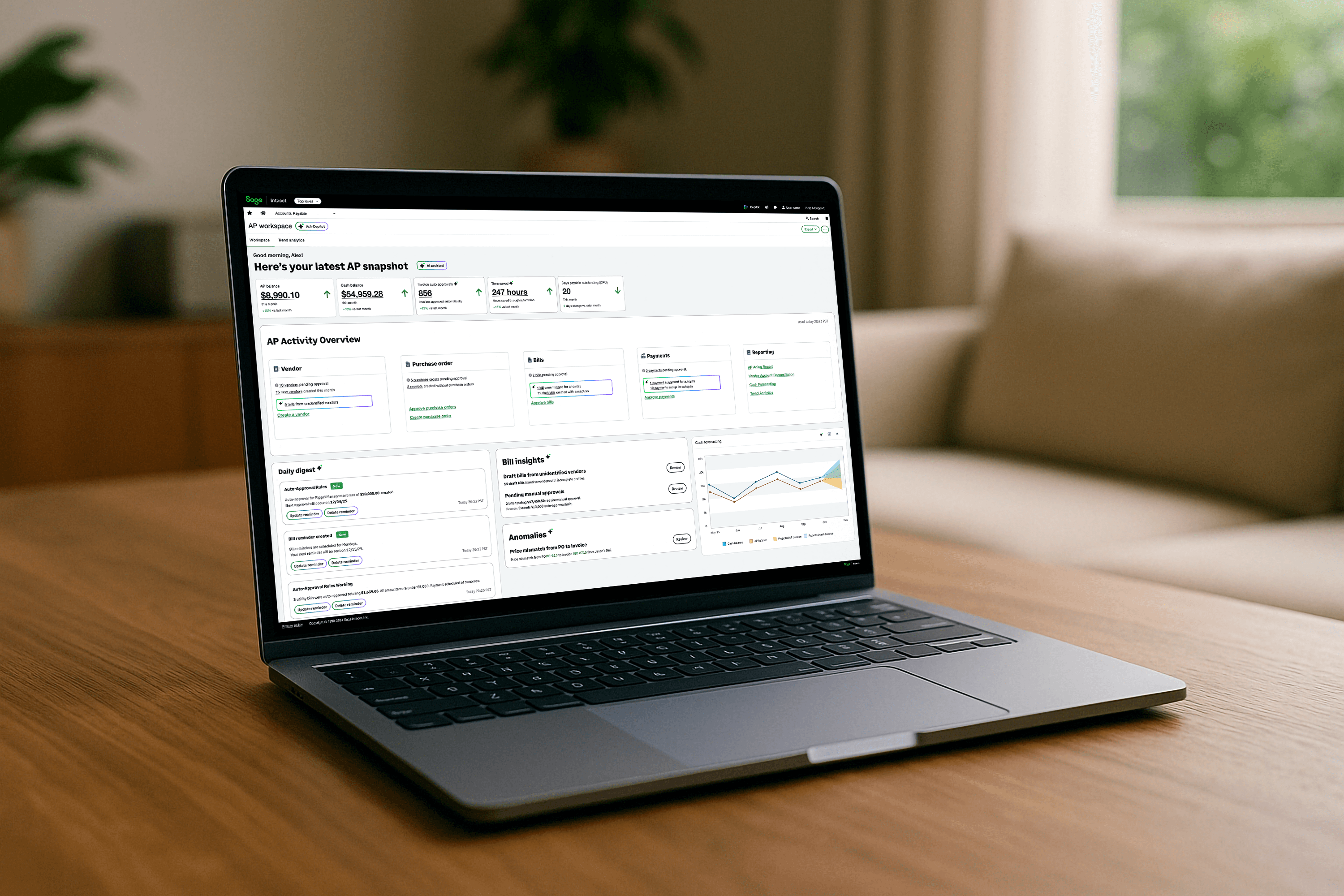
This work focuses on designing for intelligence rather than visibility. Across Copilot and agentic AI initiatives, I explored how systems can recognize patterns, assess risk, and proactively surface what matters most so users spend less time searching for issues and more time making informed decisions.
Rather than starting with dashboards or chat, the goal was to design an intelligence layer that understands context, timing, and user intent, and then guides action responsibly.
Designing the Intelligence Layer
I designed agentic and Copilot experiences embedded directly into real financial workflows, including approvals, exceptions, reconciliation, payroll, and controller oversight.
These experiences prioritized:
Proactive insights over reactive exploration
Role-aware recommendations based on authority and responsibility
Decision-focused interactions surfaced in product, Teams, and SMS
Instead of asking users to interpret charts or prompts, the system identifies risks, flags anomalies, and recommends next steps while clearly communicating why each insight surfaced and what action is being requested. The experience adapts to where users are in the financial cycle, such as period close, cash planning, or approval deadlines.
The result is a workflow where intelligence meets users where they work, without removing human judgment.
How the System Thinks
At the core of this work is a consistent design framework for intelligence:
Signals → Insights → Actions
Raw data is evaluated against thresholds, timing, and historical patterns to generate explainable insights and recommendations.Human-in-the-Loop Control
Automation is progressive and contextual. The system recommends and assists, but final authority remains with the user, especially in high-risk or compliance-sensitive scenarios.Explainability & Trust
Every surfaced insight includes clear reasoning, confidence signals, and access to underlying data for verification and audit.Dashboards as Intelligent Workspaces
Dashboards evolve into role-aware, human-in-the-loop workspaces where intelligence surfaces priorities, provides transparency, and learns what matters most to each user.
This foundation ensured the intelligence was not only useful but also trustworthy, scalable, and appropriate for regulated environments.
Designing for intelligence shifted how users engage with complex financial systems:
Reduced cognitive load by surfacing priorities instead of raw data
Faster, more confident decision-making across approvals and exceptions
Greater trust in AI-assisted workflows due to transparency and control
Improved adoption of automation without compromising accountability
Beyond individual features, this work helped redefine how Copilot and agentic AI could support finance teams, moving from passive reporting tools to active, decision-ready systems that anticipate outcomes and support human judgment.